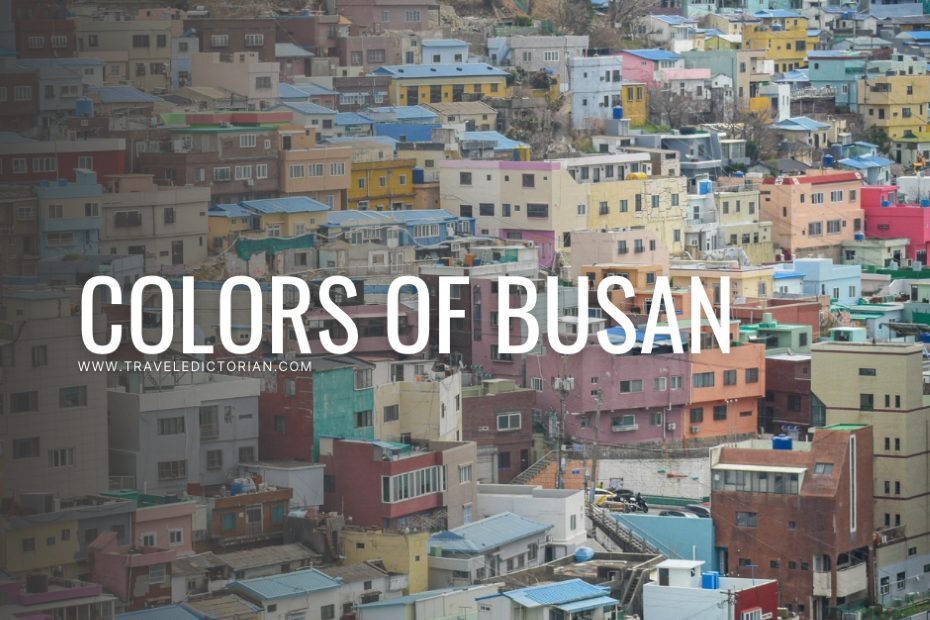
This Busan Travel Guide helps you make the most of your two days in the city. It features a well-thought-out itinerary and a detailed budget for the trip.
Disclaimer: Some information in this Busan Guide changes too often. If you continue reading this article, you agree to cross-check information with concerned authorities. Read the site’s full terms.
Introduction
In 2016, the Korean action-horror film “Train to Busan” became an instant smash, pulling a huge audience to Philippine theaters. As a movie buff, I was among those who saw this blockbuster horror flick on its first screening and was utterly in deep admiration of its survival narrative.
Admittedly, I have never heard of Busan, the film’s asylum following the zombocalypse in Seoul. Thus, I became increasingly intrigued by this hitherto unknown destination.
Busan is a maritime city that lies on the southern extremity of the Korean Peninsula. It is the largest city in South Korea, following Seoul. During the Korean War, it became a refugee camp for those displaced Koreans, much like the movie “Train to Busan.”
I embarked on the earlier train to Busan and spent roughly four hours on the high-speed rail. As intended, I arrived in the city on time, which allows me an early glimpse of all the city has to offer over the course of the next couple of days.
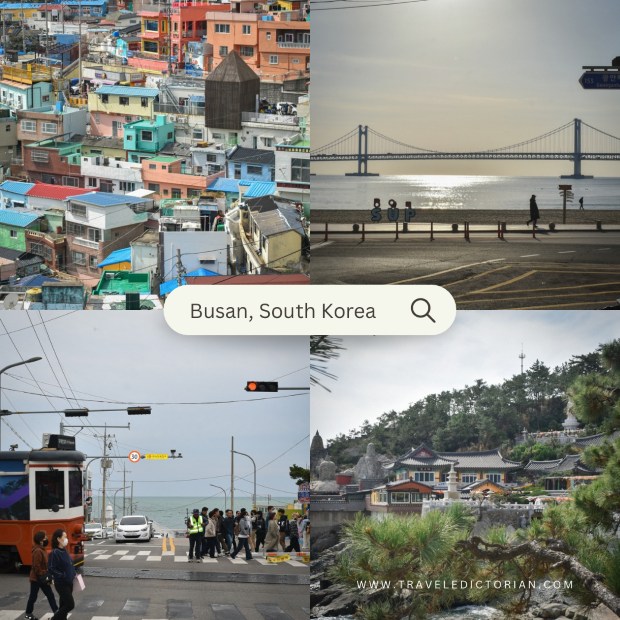
Busan features a broad range of attractions and tourist sights, like beaches, museums, temples, and theme parks. Yet what really appeals to me are the rainbow-like patterns of hillside houses of Gamcheon Village, the many-hued Haeundae Sky Capsules, and the retro-inspired beach trains, which provide a calming seaside views.
Just like the survivors from “Train to Busan” and the refugees of the Korean War, Busan became my harbor from a five-day arduous journey in Incheon, Seoul, and Chuncheon. The city, in fact, is a perfect destination to conclude my seven-day tour through South Korea.
Busan Travel Guide Contents
- Quick Fact About Busan
- Visa in South Korea
- Standard Time in Busan
- Climate in Busan
- Best Time to Visit Busan
- Language in Busan
- Currency in Busan
- Modes of Payment in Busan
- Ways of Getting to Busan
- Getting Around Busan
- Areas to Stay in Busan
- Internet in Busan
- Power Adaptor in Busan
- Busan Travel Guide Itinerary
- Budget for Busan Trip
- Travel Resources
Disclosure: This post may contain affiliate links. Thus, I earn a small commission at no extra cost to you for the purchases made through these links.
Quick Fact About Busan
Busan is dubbed the “Summer Capital of South Korea.” The coastal city boasts some of the country’s gorgeous beaches, such as the most admired seaside, Haeundae Beach.
Visa in South Korea
Bearers of foreign passports planning a trip to South Korea should contact the Embassy of the Republic of Korea in relation to entry requirements. Otherwise, consult iVisa.com, a trusted visa service provider.
When visiting South Korea for tourism, Philippine passport holders must apply for a tourist visa. That being said, learn about the Korean visa application and its essential requirements.
Standard Time in Busan
The Coordinated Universal Time (UTC) in Busan is UTC +09:00.
Busan is therefore an hour ahead of Manila, five hours ahead of Dubai, and seven hours ahead of Paris. The city is also eight hours ahead of London and thirteen hours further ahead of New York City. On the other hand, Busan lags behind Sydney by an hour and shares the same time with Tokyo.
Climate in Busan
Busan and the rest of the Korean Peninsula have a humid continental climate, which is typical of the temperate regions, including its neighboring Japan. Thus, the metropolis has weather patterns with warm to oppressive summers and severely cold winters.
Best Time to Visit Busan
Busan experiences four distinctive seasons: spring, summer, autumn, and winter, which is common of the temperate region. As such, it exhibits a unique appeal that goes well the changing seasons.
March to May
In Busan, the springtime lasts from March to May. Thus, the spring season renders idyllic weather with mild temperatures, a relatively low humidity, and a small risk of rain.
Besides this month’s comfortable weather, it is also an ideal location for “beot-kkot nori,” or cherry blossom viewing. Pay a brief visit to Dalmaji-gil and Namcheon-dong to see cherry trees in their full bloom.
June to August
June marks the start of the summer season in Busan, which lasts until July and August, the wettest months. Compared to midland cities, like Seoul, Busan bears substantially lower degrees due to its coastline location, which makes it ideal for sunbathing on one of its stunning beaches.
Additionally, typhoons and heavy rains are common during the summer months, which could interfere with outdoor pursuits.
September to November
Like spring, fall is the best time of the year to visit Busan for its pleasant temperatures and barely any chance of rain, most especially in October. Much like the rest of South Korea, it boasts gorgeous scenery of the blazing-look woodlands that are truly a visual feast.
Busan Travel Guide Tip: The annual Busan International Film Festival, one of the most prestigious cinematic fêtes in the world, rolls out the red carpet to the biggest stars in the film industry. Come see this star-studded event that takes place in October.
December to February
The winter months in Busan, which run from December until February, are severely cold; however, they are less snowy than in other regions of South Korea. Thus, don additional layers of clothes to keep you warm during the exceedingly cold weather.
Seollal, also called Korean Lunar New Year, is the most widely anticipated public holiday in South Korea and usually falls in January or February. There is a likelihood of business closures for three days to celebrate Korea’s most awaited holiday.
Language in Busan
Korean is the official and generally spoken language in Busan. Only a small fraction of the population, specifically the younger ones, speak English fluently.
To navigate the city, it is thus imperative to utilize GPS navigators and voice translators or simply rely on English-displayed signposts and markings. Moreover, tourist centers are located near train stations and attractions.
Here are some essential Korean words and phrases to learn before your trip to Busan:
- Excuse me. – Shillye hamnida.
- How much is this? – Igeo eolmayeyo?
- Souvenir – Ginyeom
- It is too expensive. – Neomu bissayo.
- Can you give me a discount? – Jom kkakkajuseyo?
- Please. – Juseyo.
- I’ll pay with a card. – Kadeuro halgeyo.
- Thank you. – Gamsagamnida.
- You’re welcome. – Cheonmahnehyo.
Currency in Busan
Abbreviated as KRW, the Korean Republic won, is the official currency in South Korea. The exchange rate as of January 31, 2026, is KRW 1, PHP 0.041, or USD 0.00069.
Busan Travel Guide Tip: Convert your currency to Korean won in downtown Busan, as the exchange rates are better than those at the airport.
Modes of Payment in Busan
South Korea is among the largest electronic retailing markets, where a sizeable fraction of consumers use digital transactions. Thus, the surge of e-payments and several other swipe cards have switched the country into a cashless society.
Cash
Hard cash is less common in Busan and the rest of South Korea. However, small-scale purchases at food stalls and convenience stores accept this payment option.
Bank Card
Credit, debit, and several other forms of prepaid cards are the most common payment tools in South Korea. Using a swipe card, such as “Mastercard” and “Visa,” and their regional counterparts, like “Lotte Card,” ensures uninterrupted transactions both online and in-store.
Digital Wallet
“KakaoPay” and “Naver Pay” are two of the favored mobile wallets in South Korea. It is useful and much more practical for a variety of dining transactions and retail purchases in Busan.
Transit Pass
A transit pass, or a travel card, is a method of payment that allows a passenger to utilize mass public transit for a set period of time. The transit pass, which can be a physical or digital card, thus ensures a really quick and effortless ticket processing.
Busan Travel Guide Tip: Whether they are meant for short- or long-term use, several transit pass options are readily available in Busan.
- Much like the Discover Seoul Pass, Visit Busan Pass is an all-inclusive pass for Busan. This practical transit pass covers unlimited rides on public transit, ranging from 24 to 48 hours. Additionally, the Visit Busan Pass includes free access to the city’s top attractions and complimentary retail vouchers.
- Cashbee Card, on the other hand, is a handy and suitable payment option for those seeking ease of access to public transport in Busan, such as metros, buses, and taxis. In addition, the prepaid card, which is available and reloadable at the train stations and convenience stores, is accepted as payment for small purchases. The Cashbee Card typically costs KRW 3,000, PHP 122.48, or USD 2.07 for the physical card alone.
- The T-Money is an all-encompassing travel pass on South Korea’s metro, buses, and even taxis. It can be sold from KRW 3,000, PHP 122.48, or USD 2.07 and reloaded at key ports, rail stations, and convenience stores, including CU and GS25.
- WOW Pass is intended exclusively for foreign visitors. It serves both as a transit pass and debit card, which can be preloaded and recharged with various currencies. A regular card is priced at KRW 5,000, PHP 204.13, or USD 3.45. For faster transactions, purchase a WOW Pass online.
Ways of Getting to Busan
Busan lies in the southeasternmost region of the Korean Peninsula. The sprawling coastal metropolis shares a land border with South Gyeongsang Province to the north and west. Besides, Korea Strait is further bounded to the south and east.
The seacoast city is accessible via air, land, and sea. As such, getting through Busan is comparatively less difficult with a variety of transit routes, irrespective of whether you are traveling from the mainland or Japan.
By Air
The Gimhae International Airport is the main gateway through Busan and the rest of Jeolla and the Gyeongsang provinces. It serves a great volume of international flights, specifically in the Southeast and East Asian regions, such as Singapore and Bangkok.
While getting to Busan from Incheon Airport is accessible with a high-speed train or with ferries from Jeju Island and Japan, taking a flight to Busan is by far the more convenient and practical option.
Busan Travel Guide Reminder: The flight time between Manila and Busan is around 3 hours and 50 minutes.
By Land
Incheon to Busan
Incheon International Airport, South Korea’s main gateway, is the largest aviation hub in the country and among the world’s busiest. It serves numerous overseas flights that span continents.
The Airport Railroad Express, or just AREX, which heads to Seoul, is an option for those arriving at the Incheon International Airport. From Seoul Station, catch the Korea Train Express, or simply KTX. It is a lightning-fast rail service that runs parallel between Seoul and Busan stations in roughly 4 hours.
Gimpo to Busan
The Gimpo International Airport, which lies in Gyeonggi Province, operates domestic and overseas traffic, primarily from China, Japan, and Taiwan. Those coming from the Gimpo Airport may take the quickest route to reach Seoul in just 30 minutes with an airport train service.
Thereafter, take a high-speed train, or KTX, at Seoul Station or intercity buses that goes to Busan in roughly four hours.
Gimpo to Busan
The Gimhae International Airport serves as the main gateway to South Korea’s second-largest metropolis, Busan, and the southern regions. It handles a great number of foreign flights across Southeast and East Asia.
Even while a two-hour flight provides much convenience and speed, travelers arriving in Busan may choose to take the slower but less expensive intercity buses. Alternatively, board the Korea Train Express, or simply KTX, a fast train that runs parallel between Busan and Seoul stations for about 4 hours.
Daegu to Busan
The Daegu International Airport, much like Gimpo Airport, handles an array of overseas flights, mainly from Japan, mainland China, and cities of Southeast Asia. As such, those arriving from Daegu Airport may embark on the “KTX” to Busan Station in less than an hour. As an alternative, catch a bus or a taxi that runs between these cities in roughly an hour and thirty minutes.
By Sea
Jeju to Busan
Lying southwest of Busan, Jeju is the largest island in South Korea. It is well-known for its natural landscapes, which consistently pulls in both locals and overseas visitors.
While flying from Jeju International Airport to Daegu, Ulsan, and Busan’s nearest airhub, Gimhae Airport, is overwhelmingly practical, sailing to Busan across the Korea Strait is another option. The Jeju and Busan route, but, necessitates a longer journey with a ferry and on-ground transfers upon arrival at the mainland.
Fukuoka to Busan
Busan is about 140 miles away, or an hour’s flight from Fukuoka, a city that lies on the northwestern coast of Japan’s third-largest island, Kyushu. Taking the flight is practical; however, sea passage is also viable, as the Korea Strait splits the two locations.
The Fukuoka and Busan route follows a fix schedules, whether for daytime crossings or overnight cruises, which takes about 6 to 12 hours on board.
Getting Around Busan
Busan is one of South Korea’s largest cities, spanning roughly 770 square kilometers. As such, places of interest peppered across the sprawling metropolis are within easy reach, as Busan’s public transit network is diverse and well-integrated.
Busan Travel Guide Tip: Anticipate a gridlock and heavy commuter traffic during rush hours in Busan. Thus, steer clear from 7:00 a.m. to 9:00 a.m. and 5:00 p.m. to 7:00 p.m.
Train
The Busan rail network, which includes the subways, light rail transit, and regional trains, makes commuting in the metropolis much more convenient. As such, commuters may expect an uninterrupted journey, specifically around the city center, as the rail service runs on time and precisely follows a timetable.
Light Rail Transit
Busan-Gimhae Light Rail Transit (BGL) is an automated, above-ground train service that bridge Busan and neighboring Gimhae. The Gimhae International Airport is one of the 21 stops of the light rail transit that facilitates convenient transfers between Busan, via the Sasang Station, the airport, and the rest of South Gyeongsang Province.
A regular single-journey ticket starts at KRW 1,700, PHP 69.40, or USD 1.17 with fare discounts applied to teenagers, children ages 6 to 12, seniors, and individuals with impairments. Additionally, holders of transit pass are eligible for a reduced fare.
Typically, the first train leaves at 5:00 in the morning and terminates at midnight.
Subway
Busan Metro consists of 4 main lines, which are interconnected to other train lines. The underground rail service runs across various locations in the city and makes stops at key points of interest.
The Busan Metro usually begins operation around 5:00 a.m. until midnight. Although it is distance-dependent, a one-way journey for a regular ticket is KRW 1,600, PHP 65.32, or USD 1.10. A fare reduction also applies to the elderly, students, and holders of transit card.
Regional Train
The Donghae Line, or the East Sea Line, is a seaside route, which substantially enhances access to areas along the east coast. This coastal railway, which affords scenic drives through the Sea of Japan, connects Busan to other key cities, like Ulsan, and the rest of Gyeongsang and Gangwon provinces.
Although the fare varies according to the distance, a single-journey ticket for an adult passenger starts at KRW 1,450, PHP 59.20, or USD 1.00. The first departing train, on the other side, runs at five in the morning and comes to an end at midnight.
Tourist Train
A tourist train is a rail service intended exclusively for touristic or leisure purposes. Sightseeing trains, such as the varicolored self-driving monocabs and vintage-inspired beach trains traversing at a snail’s pace along the Haeundae Blueline Park, provide a sprawling seaside panorama.
Bus
Busan has an efficient and wide-coverage bus network, much like Hong Kong, with over a hundred interconnected routes that serve commuters from all across the sprawling coastal metropolis. Whether for the usual commuting or just simply for sightseeing excursions, the city buses in Busan act as a reliable and practical transport option in the absence of rail routes.
Regular Bus
In Busan, regular buses, along with express, village, and late-night buses, are identified according to their route-specific colors and codes that are clearly displayed on a digital signage. Busan Bus 1001, for instance, runs on its way east and traverses through points of interest, such as Haeundae Beach and Haedong Yonggunsa Temple.
The base fare for the regular bus in Busan is KRW 1,700, PHP 69.40, or USD 1.017, but teenagers, children ages 6 to 12, and those users of transit passes are eligible for a fare discount. In addition, public buses often run between 5:00 a.m. up until midnight. Take a late-night bus instead if heading home past 12:00 a.m.
Busan Travel Guide Reminder: How do I get on and get off the bus in Busan? Most buses in Busan have two doors. Enter through the front door and pay cash at the farebox next to the driver. Instead, hover over your card or transit passes, like “Visit Busan Pass,” on the card reader machine, then get an open seat.
Press the “stop” button when you approach your destination. Then, tap your transit card as you leave through the middle door.
Limousine Bus
As an alternative to the light rail transit, take the limousine bus service that runs parallel between Gimhae International Airport and downtown Busan. This 23-seater limousine is equipped with comfortable seats, luggage compartments, and free Wi-Fi aboard.
The service is limited to card payments. As such, spend KRW 7,500, PHP 306.19, or USD 5.17 for the airport and Haeundae-Gijang route. On the other side, the first departing bus is at around 5:00 in the morning.
Private Bus
A private bus, which can carry up to thirty passengers, is intended primarily for foreign tourists who want to see Busan at their leisure. The service charge for the nine-hour excursion, which includes the driver, tolls, fuel, and parking fees, starts at around KRW 800,000, PHP 32.660.25, or USD 551.42.
Tourist Bus
A tourist bus, typically a double-decker bus, is meant primarily for recreational purposes. The bus fleet, which loops through Busan’s top tourist attractions, is identified by their route-specific colors, including red, orange, and green. Busan’s tourist bus service runs Wednesday through Sunday, from 9:20 a.m. until 6:45 p.m.
Taxi
Although taxis make commuting in Busan a lot more convenient, their fares are slightly more expensive than those of other forms of public transport. There are two types of taxi in Busan that can hold up to 10 passengers: the gray-colored standard taxi and the black cab with a yellow roof sign, the deluxe taxi.
Hailing one is comparatively easier because of their proximity to rail stations, shops, and tourist attractions. As an alternative, utilize a ride-hailing app, like “Kakao T,” or make a reservation through the “k.ride” app, which is meant for foreign visitors.
A four-seater standard taxi has a base fare of KRW 4,800, PHP 195.96, or USD 3.31. It gradually increases to KRW 100, PHP 4.08, or USD 0.069 for every further 132 meters or 33 seconds. If you opt for a larger capacity taxi, the deluxe, the flat rate is KRW 7,500, PHP 306.19, or USD 5.17. It progressively rises to KRW 200, PHP 8.17, or USD 0.14 for each succeeding 140 meters or 33 seconds.
Late-night trips between 12 a.m. and 4 a.m. is subject to a 20% surcharge.
Cable Car
The Songdo Marine Cable Car, which spans over a kilometer, is an aerial lift that crosses both sides of Songdo Beach, the first public beach in Busan. This thrilling ropeway flight over Songdo Beach offers a bird’s-eye view of the expansive eastern seas and Busan’s panoramic coastlines.
Songdo Marine Cable Car is open year-round from 9:00 a.m. to 8:00 p.m. and extends up until 10:00 p.m. in July and August. The final entry is 30 minutes before closing time.
Would you want to witness Busan from a completely different perspective? Grab your Busan Air Cruise Songdo Marine Cable Car Ticket to admire the captivating aerial views of the city as you glide in the air.
Ferry
Taking the ferry is a further way to explore the maritime city, which offers an impressive coastal panorama. A leisurely strolls along the shores of Busan, whether on a daytime tour or evening cruise, allows you to see its urban landscapes and natural scenery.
Discover Busan in a whole new light! Set sail on the Busan Yacht Tour, which takes you to the breathtaking beaches of Haeundae and Gwangalli. Enjoy this experience with even more dramatic twilight scenes.
Areas to Stay in Busan
Busan is not only a thriving port city but also an increasingly renowned tourist destination with an overwhelming range of sights to see and recreational opportunities that tend to pull in visitors. Interestingly, a wide range of hotel options are also around and close to important sites of interest. As such, here are the most preferred neighborhoods in Busan for your next holiday break.
Dong
Busan Station, a vital railway artery bridging the city to many other parts of South Korea, lies in Dong District, Busan’s primary transit center. This transport-accessible location is adjacent to several places of interest, which include Busan Chinatown, and a plethora of lodging options.
The 4-star ASTI Hotel Busan Station, along with the budget-centric Dante House Busan, is a stone’s throw from the main rail station.
Jung
Located in downtown Busan, Jung District, Nampo in particular, is a bustling retail and dining location with a parade of shops and upmarket shopping centers. Additionally, it is home to Jagalchi Fish Market, the largest seafood market in South Korea, making it the center of Busan’s culinary scene.
Jung District is also peppered with a broad collection of lodging facilities. The luxury Gaon Pool Villa is just a handful of the many accommodation options, offering first-rate hospitality experiences.
Seo
Seo, which essentially translates to “west,” is a heavily residential district southwest of Busan. The neighborhood boasts one of the earliest communal beaches in South Korea, Songdo Beach, making it the ideal location for those who prefer a seafront lodging, like the 4-star Grab The Ocean Songdo.
In addition, the area shares a boundary with Saha District, home to the crowd-pleasing “Gamcheon Culture Village,” one of Busan’s must-see cultural attractions.
Suyeong
Much like Seo District, Suyeong features the stunning Gwangalli Beach that consistently draws crowds of tourists seeking a shoreline respite. As such, a great number of lodging options are along the beachfronts, affording breathtaking ocean views that complement well with the imposing Gwangan Bridge.
At night, Gwangalli Beach transforms into a magical wonderland as the light and sound spectacles offer dramatic nighttime views. Book All New Diamond House or Pinocchio House to witness the spectacular evening extravaganza.
Haeundae
As the name implies, Haeundae is home to Haeundae Beach, which is undoubtedly the most well-known seaside destination in South Korea. Locals, as well as Korean celebrities, often visit Haeundae Beach in pursuit of a beachside getaway with an array of dining and pub options. Additionally, the Haeundae Blueline Park is around the corner, offering a delightful way to observe the scenic coastal views.
Haeundae also features a selection of luxury hotels, such as The Westin Josun Busan and the LCT Residence Y Collection, and budget stays, like MAMA Guesthouse, all of which afford seaside views.
Gijang
Gijang, which lies on Busan’s northeastern extremity, is a fairly distant area from the city center. It is largely undeveloped and densely forested, which further adds to its calm and leisurely setting.
In contrast to the areas in downtown Busan, Gijang offers relatively few lodging options, predominantly villas and resorts, close to the shores. Stay in Ananti at Busan Cove and get closer to several of Gijang’s notable sites and attractions, like Haedong Yonggungsa Temple and a couple amusement parks.
Internet in Busan
Busan, much like several other major cities in South Korea, provides free wireless internet service to the general public via “Dynamic Busan,” which enables high-speed access to the internet. The Wi-Fi service is available at passenger terminals, beach premises, tourist sites, and cultural centers.
Additionally, numerous top cafe brands and restaurants in Busan extend complimentary shared Wi-Fi service to their patrons. As an alternative, think about purchasing a prepaid SIM card for a seamless run around Busan.
Power Adaptor in Busan
Busan operates on a 220 V supply voltage with a frequency of 60 Hz and uses two types of power plugs:
- C or has two round pins
- F or has two round pins with two earth clips on both sides
Explore the “Land of the Morning Calm” in 7 days! Firstly, read the Incheon Travel Guide for a comprehensive South Korea itinerary.
Busan Travel Guide Itinerary
Day 1 - Dong, Saha and Jung
Busan Travel Guide Reminder: It takes around 500 meters to walk from points A to B.
09:38 am Arrival in Busan from Chuncheon
09:38 am – 09:43 am Walk toward hotel
09:43 am – 10:28 am Confirm reservation and check-in at Almond Hotel Busan Station, and drop the luggage
Busan Travel Guide Tip: As an alternative, stay in a hostel. A hostel is an inexpensive accommodation facility that provides basic amenities, such as bunk beds and communal bathrooms. Thus, if you’re on a tight budget, book a hostel in Busan.
10:28 am – 10:34 Walk to Busan Station
10:34 am – 10:42 am Head toward Toseong Station
- From Busan Station
- Take Busan Metro Line 1 (or Orange Line) – 70095 toward Dadaepo Beach Station
- Exit via Exit 6, Toseong Station
10:42 am – 10:45 am Head to Pusan National Hospital Bus Stop
- From Toseong Station
- Walk toward Pusan National Hospital Bus Stop via Gudeok-ro
- Turn right at Kkachigogae-ro
10:45 am – 10:49 am Head toward Gamjung Elem. School, Gamcheon Village Bus Stop
- From Pusan National Hospital Bus Stop
- Take the Bus Seo-gu 2-2 (or Bus Seo-gu 2, or Saha-gu 1-1) to Daehan Susan Station
- Alight at the Gamjung Elem. School, Gamcheon Village Bus Stop
10:49 am – 10:50 am Walk to Gamcheon Culture Village via Gamnae 2-ro
10:50 am – 02:05 pm Explore Gamcheon Culture Village and have lunch
Gamcheon Culture Village
Located in the hilly terrains of Saha District, the Gamcheon Culture Village is a visually appealing hillside community that bears a resemblance to Santorini’s Cycladic houses and Peru’s Machu Picchu. In 1955, following the Korean War, many desolated families were settled into the village with unsightly and poorly kept dwellings.
However, in the 2000s, rehabilitation efforts were carried out in an attempt to revitalize the winding, maze-like village where homes are painted in hues. The Gamcheon Culture Village consistently attracts visitors with its assortments of shops, museums, and eye-catching public art installations that blend well with the colorful setting.
Busan’s most captivating attraction is open all year with the exception of all commercial establishments, which generally open from 9:00 a.m. until 06:00 p.m.
02:05 pm – 02:07 pm Walk toward Gamjung Elem. School, Gamcheon Village Bus Stop via Okcheon-ro
02:07 am – 02:16 am Head toward Jagalchi Market, BIFF Square Bus Stop
- From Gamjung Elem. School, Gamcheon Village Bus Stop
- Take the Bus Seo-gu 2-2 to Daehan Susan
- Alight at Jagalchi Market, BIFF Square Bus Stop
02:16 pm – 02:20 pm – Head to Jagalchi Fish Market
- From Jagalchi Market, BIFF Square Bus Stop
- Walk to Jagalchi Market via Jagalchi-ro 47 beon-gil
- Turn left at Jagalchihaean-ro
02:20 pm – 03:00 pm Explore Jagalchi Fish Market
Jagalchi Fish Market
The Jagalchi Fish Market, which lies next to Busan’s Port of Nampo, is among the city’s most recognizable cultural landmarks. From its humble beginning as a venue for informal fishmongers in the post-Korean War period, it then flourished to be South Korea’s largest seafood hub.
Countless fish vendors, mostly the Jagalchi Ajumeoni, or middle-aged women, market a vast variety of freshly landed catches and cured seafoods from side streets and stalls housed in a multi-purpose facility. Certainly, the hectic scenes from Jagalchi Fish Market serve as a testament of the bustling fishing industry in Busan.
Jagalchi Fish Market typically open as early as 5:00 a.m. until 10:00 p.m.
03:00 pm – 03:05 pm Head to Gwangbok-ro Fashion Street
- From Jagalchi Fish Market
- Walk toward Jagalchihaean-ro
- Turn left at Jagalchi-ro
- Then cross and walk toward Gudeok-ro
- Turn right at Gudeok-ro 34 beon-gil
- Then turn left at Gwangbok-ro
03:05 pm – 04:30 pm Explore Gwangbok-ro Fashion Street
Gwangbok-ro Fashion Street
Gwangbok-ro, which roughly translates to “Restoration of Light,” is an on-street retail space that memorializes the liberation of South Korea from more than three decades of Japanese rule. It is a vibrant fashion strip that goes north toward the Busan Modern History Museum at Gwangbokjungang-ro and extends westward to Gukje Market from Nampo Station’s Exit 7.
Along the crowd-pleasing shopping streets are standalone boutiques and single-brand storefronts where apparel, cosmetics, and worn accessories are put on sale, ranging from homegrown to global brands.
Opening hours vary significantly per shop.
04:30 pm – 04:35 pm Walk to Gukje Market via Gwangbok-ro
04:35 pm – 05:30 pm Explore Gukje Market
Gukje Market
Located along Gwangbok-ro Fashion Street, Gukje Market is a shopping arcade with roots in the post-Korean War era. Refugees flock to Busan and trade imported goods abandoned by the Japanese and U.S. armies in a spare lot; hence, the name “International” Market.
Hundreds of independent retailers market a wide range of goods and commodities, like clothing, household products, electronics, handicrafts, farm produce, and signature specialties. Thus, the frenetic marketplace is undoubtedly a place for those in search of a bargain.
Gukje Market typically opens from 9:00 a.m. until 8:00 p.m. from Monday to Saturday.
05:30 pm – 05:35 pm Head to BIFF Street
- From Gukje Market
- Walk toward BIFF Street via Gwangbok-ro
- Turn left at Junggu-ro
05:35 pm – 08:30 pm Explore BIFF Square and have dinner
BIFF Square
The Busan International Film Festival, or just BIFF Square, is a lively corner of Busan that exhibits South Korea’s rich film culture. Back in the post-Korean War era, it started with a couple cinemas and has since then grown into a movie district that holds a prestigious annual cinematic event.
BIFF Square is not simply a cinema complex, but also a venue packed with rows of food stalls, offering a multitude of both traditional street foods, like “tteokbokki,” and Western delicacies. Thus, for those who enjoys food for pleasure, BIFF Square opens year-round and street vendors generally operates from midafternoon until late at night.
A Must-Eat in Busan: Tteokbokki is a South Korean comfort food that is a concoction of whitish and cylindrically shaped rice cakes, fish cakes, boiled eggs, and spring onions. To taste, the chewy Korean snack is seasoned with chili paste or soy sauce.
08:30 pm – 08:36 pm Head toward Jagalchi Station
- From BIFF Street
- Walk to Jagalchi Station via Gudeok-ro 84 beon-gil
- Turn left at Gudeok-ro
- Enter at Entrance 5, Jagalchi Station
08:36 pm – 08:42 pm Head toward Busan Station
- From Jagalchi Station
- Take Busan Metro Line 1 (or Orange Line) – 70134 toward Jangjeon Station
- Alight at Exit 6, Busan Station
08:42 pm – 08:47 pm Walk toward hotel
08:47 pm – 10:30 pm Check-in and prepare for sleep
10:30 pm Sleep
Day 2 - Gijang, Haeundae, Suyeong
Seoul Travel Guide Reminder: It takes at least a kilometer to walk from points A to B.
06:00 am – 08:00 am Wake up, prepare for the tour, and have breakfast
08:00 am – 08:05 am Walk to Busan Station Bus Stop
08:05 am – 09:02 am Head to Dongbusan Tourist Complex Bus Stop
- From Busan Station Bus Stop
- Take Bus 1001 Hadan to Cheonggang-ri Public Garage
- Alight at Dongbusan Tourist Complex Bus Stop
09:02 am – 09:20 am Head to Haedong Yonggungsa Temple
- From Dongbusan Tourist Complex Bus Stop
- Walk toward Haedong Yonggungsa Temple via Gijanhaean-ro
- Turn right at Yonggung-gil
09:20 am – 11:00 am Explore Haedong Yonggungsa Temple
Busan Travel Guide Reminder: Whether you are a devotee or simply a temple visitor, treat religious beliefs and hallowed places with reverence. When visiting a place of worship, be mindful of temple etiquette.
Haedong Yonggungsa Temple
The Haedong Yonggungsa Temple, which lies on the northeast shores of Busan, is an ocean-facing Buddhist shrine that sits over the rocky cliffs. This distinct coastal temple complex was built for Haesu Gwaneum Daebul, the great sea goddess.
First constructed in the 1300s, the religious shrine was caught in a fire during the “Imjin War,” or Japanese invasion of Korea. Then, the 1930s saw its reconstruction for spiritual purposes as well as cultural immersion.
Haedong Yonggungsa Temple provides free entry from 4:30 a.m. until 7:20 p.m. with last admission at 6:50 p.m.
Have a blast!!! Skyline Luge Busan and the Lotte World Adventure Busan are around the corner. Embark on the thrilling rides that surely leave you with an exhilarating feeling. Grab your tickets now!
11:00 am – 11:17 am Walk to Yonggungsa Temple, National Institute of Fisheries Science Bus Stop via Yonggung-gil and cross Gijanhaean-ro
11:17 am – 11:35 am Head to Youngnam Apt.
- From the Haedong Yonggungsa Temple, National Institute of Fisheries Science Bus Stop
- Take Bus 100 – Jangjeon Station to Cheonggang-ri Public Garage
- Alight at Youngnam Apt. Bus Stop
11:35 am – 12:15 pm Have lunch
12:15 pm – 12:30 pm Head to Cheongsapo
- From Youngnam Apt. Bus Stop
- Walk toward Cheongsapo Village via Jwadongsunhwan-ro
- Turn left at Cheonsapo-ro
12:30 pm – 02:00 pm Explore Cheongsapo
Cheongsapo
Cheongsapo is a scenic coastal village that appeals to huge crowds of day-trippers for its country-like setting. The quaint seaside settlement features various attractions that enhance your shoreline viewing experience, including watchtowers, skywalk observation decks, and charming seaside railways.
In addition, there are beachfront restaurants and cafés that further add to the area’s like-home atmosphere.
02:00 pm – 02:45 pm Walk to Haeundae Beach via Busan Green Railway Trail
Busan Travel Guide Tip: The span between Cheongsapo and Mipo stations is about 5 kilometers. Thus, if you don’t have the stamina to match the long walks, then take a scenic ride on the coastal trains as you soak in the views of Busan’s coastlines. Get your Haeundae Blueline Park Sky Capsule and Beach Train vouchers today!
Just a second! Before you take pleasure in the pristine beach of Haeundae, you might want to climb the second tallest building in South Korea, the Haeundae LCT The Sharp Landmark Tower. The sky-high structure houses an observation deck, which offers commanding views of the coastal city.
In addition, drop in and take a sip of your favorite Caramel Macchiato in the world’s highest Starbucks Coffee store located on the 99th floor. Get a BUSAN X the SKY pass now to enjoy the comprehensive view of the city while savoring a brew!
02:45 pm – 03:59 pm Explore Haeundae Beach
Haeundae Beach
Haeundae Beach is without a doubt South Korea’s most widely known summer beach destination. Besides a public bathing space, the sun-bleached shore, which spans close to 1.5 kilometers long and roughly 40 meters broad, holds crowd-pleasing events, like the Polar Bear Festival and the Haeundae Sand Beach Fest.
Along the stretches of Haeundae Beach are commercial facilities as well as recreational amenities that further add to its widespread appeal. It is swarmed with beachfront cafés, restaurants, freestanding shops, and marine parks, like the SEALIFE Busan Aquarium.
03:59 pm – 04:04 pm Walk toward Entrance 3, Haeundae Station via Gunam-ro
04:04 pm – 04:16 pm Head to Gwangan Station
- From Haeundae Station
- Take Busan Metro Line 2 (or Green Line) – 70243 toward Yangsan Station
- Alight at Exit 3, Gwangan Station
04:16 pm – 04:30 pm Walk to Gwangalli Beach via Gwangan-ro
04:30 pm – 08:15 pm Explore Gwangalli Beach and have dinner
Gwangalli Beach
Gwangan, or Gwangalli, Beach, which lies west of the shores of Haeundae, is roughly a crescent-like coastal destination with a view of a massive suspension bridge. The fine-grained sands sunspot, which stretches around 1.5 kilometers and 25 to 110 meters in width, is not just a public bathing location but also the main stage of the Gwangalli M (Marvelous) Drone Light Show.
Busan Travel Guide Tip: The Busan’s Gwangalli M (Marvelous) Drone Light Show is a free evening exhibition that happens every Saturday and follows two separate schedules at 7:00 p.m. and 9:00 p.m. Drone swarms perform in synchrony, transforming Gwangalli Beach’s skies into a jaw-dropping works of art that goes well with the brightly illuminated Gwangan Bridge.
Gwangan Beach is more than just a public space for swimming and sunbathing. The vast array of retail establishments along the waterfront attracts those visitors seeking shopping, dining, and exciting night outs.
Busan Travel Guide Tip: Do you intend to travel to Busan in the spring? Well, Namcheon Cherry Blossom Street is right next to Gwangalli Beach. Pay a brief visit to see a tunnel-like exhibit of cherry blossoms, or “beot-kkot.”
08:15 pm – 09:03 pm Walk to Gwangan Station Bus Stop via Gwangan-ro and cross Suyeong-ro
09:03 pm – 09:26 pm Head toward Busan Station Bus Stop
- From Gwangan Station Bus Stop
- Take Bus 1001 (or 1003) to Cheonggang-ri Public Garage
- Alight at Busan Station
09:26 pm – 09:31 pm Walk to hotel
09:31 pm – 10:30 pm Prepare for sleep
10:30 pm Sleep
Day 3 - Manila
Busan Travel Guide Reminder: It takes around 300 meters to walk from points A to B.
06:00 am – 08:00 am Wake up, prepare for departure, have breakfast, and early check-in
08:00 am – 08:10 am Walk toward Entrance 6, Busan Station
08:10 am – 08:27 am Head to Seomyeon Station
- From Busan Station
- Take Busan Metro Line 1 (or Orange Line) – 70134 toward Nopo Station
- Alight at Seomyeon Station
08:27 am – 08:48 am Head toward Sasang Station
- From Seomyeon Station
- Take Busan Metro Line 2 (or Green Line) – 70243 toward Yangsan Station
- Exit via Exit 4, Sasang Station
08:48 am – 08:55 am Head toward Gimhae International Airport Station
- From Sasang Station
- Take Busan-Gimhae LRT Line (or Purple Line) – 70921 toward Gayadae Station
- Exit via Exit 1, Gimhae International Airport Station
08:55 am – 09:00 am Walk toward Gimhae International Airport
09:00 am – 12:55 pm Airport check-in, clear immigration and custom checkpoint, and boarding
12:55 pm Departure from Busan
Busan Travel Guide Tip: Osaka is just a ferry ride away from Busan. Thus, take a Busan-Osaka Ferry Cruise to start your journey to the “Land of the Rising Sun.” Book a seat for your next stop!
Budget for Busan Trip
In 2025, I spent PHP 13,264.05 for two days in Busan. However, costs may still vary depending on your travel lifestyle. Read “35 Excellent Tips to Save Money on Travel.”
Below is the Busan travel guide budget for your reference.
Pre-Departure
- Gimhae International Airport to Ninoy Aquino International Airport via plane, PHP 4,765.89
- Seoul Station to Busan Station via KTX, PHP 2,674.62
- 3D2N accommodation in Busan, PHP 6,395.24/ 2, PHP 3,197.62
1st Day
- Breakfast, PHP 304.20
- Busan Station to Toseong Station via train, PHP 62.40
- Pusan National Hospital Bus Stop to Gamjung Elementary School, Gamcheon Village Bus Stop via bus, PHP 60.95
- Lunch, PHP 292.50
- Gamjung Elementary School, Gamcheon Village Bus Stop to Jagalchi Market, BIFF Square Bus Stop via bus, PHP 60.95
- Dinner, PHP 287.75
- Jagalchi Station to Busan Station via train, PHP 62.40
2nd Day
- Breakfast, P 292.50
- Busan Station Bus Stop to Dongbusan Tourist Complex Bus Stop via bus, PHP 86.11
- Yonggungsa Temple, National Institute of Fisheries Science Bus Stop to Youngnam Apt. Bus Stop via bus, PHP 60.95
- Lunch, PHP 243.75
- Haeundae Station to Gwangan Station via train, PHP 62.40
- Dinner, PHP 294.45
- Gwangan Station Bus Stop to Busan Station Bus Stop, PHP 81.90
3rd Day
- Breakfast, PHP 285.15
- Busan Station to Seomyeon Station via train, PHP 62.40
- Seomyeon Station to Gimhae International Airport Station via train, PHP 86.11
Travel Resources
To help you with your travel plans, I have gathered a checklist of carefully chosen travel resources. These are the trusted online marketplaces that I highly endorse because of their excellent deals.

Looking for an easy-peasy solution to process your visa application and other travel documents? Consult iVisa!

SafetyWing is your safeguard for travel medical and health insurance while away from home.

The sky is the limit with Skyscanner if you are looking for better and cheaper flight options for your next trip.

Reserve a room on one of the largest online hotel booking platforms, Agoda. It offers unbeatable hotel deals!

Explore the world with HostelWorld! Make a reservation and share a space with newfound buddies.

Drive your way to undiscovered places! Book a car via Discover Cars and experience hassle-free road trips.


Busan Travel Guide Question: What is the largest seafood market in South Korea?
Please leave your answer and remarks in the comment section. Thank you!
About the Author
J. Sac is the author of “Busan Travel Guide: An Excellent Guide to the World.” He is also the founder of Traveledictorian – a travel blog that publishes well-thought-out travel content.
His passion for writing, photography, and travel fueled him to explore Asia and the rest of the world. He also plans to undertake humanitarian work in his travels. Read his inspiring story and follow him on social media!
P.S. Subscribe to our newsletter for the newest travel guides and the latest updates in the travel industry.