This Samal Travel Guide helps you make the most of your day in the city. It features a well-thought-out itinerary and a detailed budget for the trip.
Disclaimer: Some information in this Samal Guide changes too often. If you continue reading this article, you agree to cross-check information with concerned authorities. Read the site’s full terms.
Introduction
I arrived at Babak Ferry Terminal early in the morning and headed straight to the nearest convenience store to grab a quick bite while waiting for the tour guide. While awaiting, a 7.4 magnitude quake jolted Samal, together with several portions of eastern Mindanao, which prompted intense panic on-site.
Seeing the swaying utility poles, we dash to the immediate open space to secure a safe place. The high-intensity tremor heightened an unsettling feeling, thinking that a tsunami might trigger the coastal island.
Admittedly, the trip was a mixture of delight and scare. However, our fear intensified as we approached Monfort Bat Sanctuary due to the threat of aftershocks. As we traveled farther, the worry turned into excitement as we came across the unspoiled beauty of the island.
At around 4:30 p.m., we wrap up the tour in an uplifting atmosphere. However, while we were having our early evening meal, another extreme 6.7 magnitude earthquake rocked the island, alarming us to vacate the dinette and rush to seek a secured location.
Even though my trip to Samal Island greeted me with a horrifying encounter, it remains a tropical paradise that will undoubtedly grab your senses. Visit Samal and let its natural charm enchant you.
Disclosure: This post may contain affiliate links. Thus, I earn a small commission at no extra cost to you for the purchases made through these links.
Quick Fact About Samal
Samal Island, also the Garden Island City of Samal, is known as the largest island resort in the Philippines. The island retreat, which spans about 300 square kilometers, is home to a wealth of vacation residences, such as the luxurious Pearl Farm Beach Resort.
Visa in the Philippines
Bearers of foreign passports who intend to visit the Philippines should contact the Embassy of the Philippines regarding entry requirements. Otherwise, consult iVisa.com, a reputable and trusted visa service provider.
The Coordinated Universal Time (UTC) in Samal is UTC +08:00.
Samal Island is four hours ahead of Dubai, seven hours ahead of Paris, and eight hours ahead of London. Moreover, Samal is twelve hours further ahead of New York City. In contrast, Samal is an hour and three hours behind Tokyo and Sydney, respectively.
Climate in Samal
Similar to the rest of the Philippines, Samal Island has a tropical climate. The city often experiences sweltering temperatures with a substantial amount of rainfall all year.
Best Time to Visit Samal
Samal is geographically outside the Pacific Typhoon Belt, which makes it less likely to receive tropical storms than other regions in the Philippines. That being said, the island is open year-round, regardless of whether you go for a beach escape during the wet or dry seasons.
June to November
The months from June until November mark the wet season in Samal. The rainy season, most particularly July through October – the wettest months – often brings in short-lived rainstorms and torrential downpours with a high likelihood of humidity.
Samal, however, is noticeably less crowded and cheaper during the off-peak season.
December to May
The dry season in Samal Island lasts from December until May, with March being the driest month. Visitors to the island are likely to anticipate clearer skies, intense humidity, and barely any chance of rain. January and February, on the other hand, have relatively cold weather.
Samal Island’s most favored seasons are often crowded and slightly more expensive, notably during the observance of “Semana Santa.”
Language in Samal
Cebuano is the broadly spoken language in Samal Island, together with “Sinama” and “Tausug,” which are used by a small fraction of locals of the island. Additionally, Tagalog and English are used for conversation and prominently displayed on public signs.
Here are some essential Cebuano words and phrases to learn before your trip to the island of Samal:
Good morning – Maayong buntag
How are you? – Kumusta ka?
What is your name? – Unsay imong ngalan?
Can I ask you something? – Pwedeng mangutana?
Where is the ATM? – Asa dapita ang ATM?
How much is the fare? – Pila man ang plete?
Where are you going? – Asa ka paingon?
I do not understand. – Wa ko kasabot.
Thank you so much. – Salamat kaayo.
How much is this? – Tagpila ni?
Can I get a discount? – Pwede makahangyo
Delicious – Lami
Let’s go. – Lakaw na.
Currency in Samal
Abbreviated as PHP, the Philippine peso, is the official currency in the Philippines. The exchange rate as of March 28, 2026, is PHP 1.00 or USD 0.017.
Samal Travel Guide Tip: Convert your money to Philippine peso in downtown Samal or Davao City, as the exchange rates are better than at the airport.
Modes of Payment in Samal
Samal remains a cash-dependent society. Certain establishments, however, accept a few other forms of payment, such as bank cards and virtual wallets.
Cash
Hard cash is the most widely used mode of payment in Samal. All on-site transactions are on a cash basis, particularly for small-scale purchases and fares for public transit.
Thus, make sure you have sufficient cash on hand, as automated teller machines on the island are barely enough and often offline.
Bank Card
Credit and debit cards, usually swipe cards bearing the names “Visa” or “Mastercard,”are also honored in select establishments in Samal, specifically in exclusive hotels and upscale restaurants.
Electronic Wallet
Besides cash and plastic cards, electronic wallets, such as “GCash” and “Maya,” are becoming increasingly popular on the island since they are a practical alternative in the event that you run out of cash. A substantial number of retail establishments and lodging facilities accept this payment method.
Ways of Getting to Samal
Samal, which lies in Davao del Norte, is an island off the coast of Davao Oriental and Davao de Oro to the east. Moreover, the island in Davao Gulf is just nearshore Davao del Sur and Davao City to the west.
Davao City to Samal
The Francisco Bangoy International Airport in Davao City is the primary gateway to the Davao Region and the remaining provinces of Southeastern Mindanao. It is the closest airhub in Samal, serving both domestic and overseas traffic, mainly from Manila, Cebu, and even Singapore.
From Sasa Wharf in Davao City, Samal is about a 15-minute sea transfer with a barge to reach Babak Pier. In addition, a boat ride from the Santa Ana Wharf to Kaputian Pier, which is a jump-off point to Samal’s Talikud Island, takes roughly 45 minutes.
Samal Travel Guide Fact: The Davao-Samal Bridge is a work-in-progress infrastructure initiative that will soon connect the neighboring cities. Once completed in 2028, the sea-crossing bridge will only take 5 minutes to reach Samal from Davao City.
Getting Around Samal
Samal is a relatively small island, however, it retains unspoiled geographical features that consistently pulls in visitors. From its pristine sandy beaches to the world’s largest colony of fruit bats, this tropical paradise is within easy reach of one another with its available on-ground and waterborne transport.
Motorbike
A motorcycle taxi, widely known as “Habal-Habal,” is a two-wheeled vehicle in which a passenger is seated immediately behind the driver. It is a fast and cheaper alternative for navigating the island that can be hired for a day excursion, suitable for those seeking an adrenaline surge experience.
Tricycle
A tricycle, often referred to as “Bao Bao,” is a three-wheeled motor-driven utility vehicle with route-specific colors tailored for each of the island’s three main districts.
The highly dependable passenger transport is designed to carry up to 4 passengers and can be chartered for private tours, besides being commonly utilized for commuting. For short distance trips, the one-way fare starts at PHP 16.00 or USD 0.26.
Van
Taking the private vehicle is another option for those seeking added convenience when going around Samal. Some lodging facilities on the island offer air-conditioned equipped passenger vans dedicated for inland tours.
A private van rental typically includes fuel, a driver and tour guide, and even snacks and meals.
Bus
Public buses, mainly the Island City Express, follow a regular schedule between Agdao in Davao City and Samal Island. The local bus fleet, departs from 6:00 a.m. until 6:00 p.m. on a 45-minute interval, make stops at key locations, including Babak, Peñaplata, and Kaputian. The fare is distance dependent.
Boat
Samal consists of Talikud Island and several islets encircling mainland Samal. Each of the islands has pristine white sandy shores that blend well with its rippling azure waters.
Set sail in a motorboat, or motorized vessel typically with two outriggers, to reach them. Both tour companies and independent boat operators offer watercrafts for a fee.
Areas to Stay in Samal
Samal is generally recognized as the largest island resort in the Philippines, with a plethora of lodging options that are spread out across the three administrative districts. The assortments of guest accommodations, which range from cozy hostels to luxurious properties, enable you to take pleasure in a peaceful retreat in a tropical setting.
Here are the best neighborhoods in Samal to spend your holiday getaway.
Babak
Babak, which lies on the northern portion of Samal, is among the three primary districts of the island. The neighborhood is the main point of entry, receiving passengers from all across Davao City.
Additionally, Babak is home to a handful of hotels, like Club Samal Resortand Discovery Samal, which are closer to Babak Ferry Terminal and tourist spots like Monfort Bat Sanctuary.
Samal
The District of Samal, specifically the town of Peñaplata, is the seat of government and the center of commerce, with an abundance of retail establishments clustered around it.
In addition, Samal District offers a fair share of lodging options, primarily affordable inns, like Cris Inn Samal, which is near to a great deal of shops and eateries. The well-known Hagimit Falls is a short drive from downtown Samal.
Kaputian
Kaputian, a neighborhood south of Samal District, boasts a broad collection of guest accommodations, typically seafront resorts and villas, which includes the island’s luxury residence, the Pearl Farm Beach Resort.
The area also has the highest concentration of tourist spots, like Talikud Island, a piece of land with white powdery shores. Talikud, which lies southwest of Samal, is enough for a daytime stroll. However, staying overnight, particularly at the Linden Beach Talikud, is a way to completely experience the unspoiled island destination.
Internet in Samal
Samal offers free wireless internet access in select public parks and government offices; however, signal levels may differ depending on the location. Additionally, lodging establishments and even cafés also provide complimentary Wi-Fi to their patrons.
As an alternative, do think about purchasing a prepaid 5G eSIM for a hassle-free travel around Samal.
Power Adaptor in Samal
Baguio operates on a 220 V supply voltage with a frequency of 60 Hz and uses a type of power adaptor:
A or has two flat parallel pins
Samal Travel Guide Itinerary
Highlights: Monfort Bat Sanctuary, Sabang Cliff, Blue Bird View Deck, Hagimit Falls
Samal Travel Guide Reminder: Minors who are traveling solo or those accompanied by non-parents to Davao City must obtain a travel permit from City Social Welfare and Development Office or Special Office for Children’s Concern.
Day 1 - Babak, Samal, and Kaputian
Samal Travel Guide Reminder: It takes around 450 meters to walk from points A to B.
07:35 am – 08:00 am Arrival at Francisco Bangoy International Airport and prepare for departure
08:00 am – 08:45 am Head to Sasa Wharf
From Francisco Bangoy International Airport
Walk to Jose Maria College Jeepney Stop
Take a jeep to Lasang (or Tibungco) via Buhangin Route Panacan
Alight and transfer at Panacan Public Market Jeepney Stop
Take a jeep to Panacan (or Tibungco) via Cabaguio Route Macondray Plastic
Alight at Samal Ferry Terminal Jeepney Stop
Walk toward Sasa Wharf
Samal Travel Guide Tip: Hail a taxi or “Grab” car, instead, which will take you from Davao Airport to Sasa Wharf with much convenience.
08:45 am – 09:00 am Head to Babak Ferry Terminal
From Sasa Wharf
Take the barge
Alight at Babak Ferry Terminal
09:00 am – 04:45 pm Explore Samal Island, pay the environmental user fee, and have lunch
From Babak Ferry Terminal
Take the hired tricycle
Alight at Monfort Bat Sanctuary
Monfort Bat Sanctuary
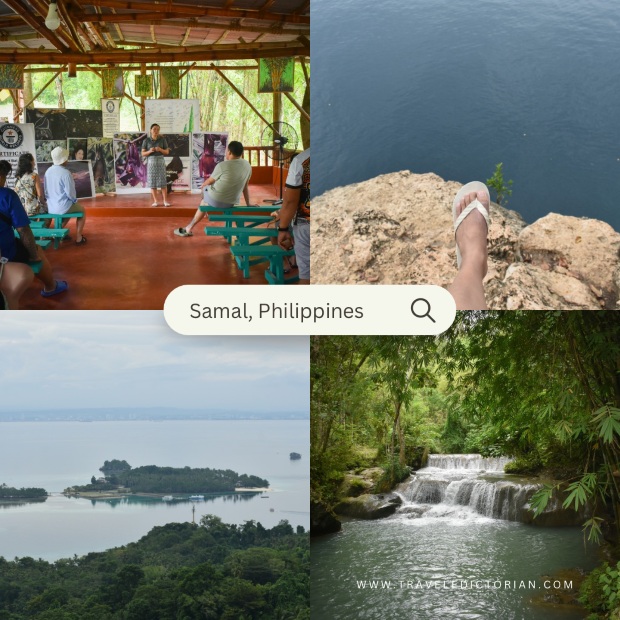
The Monfort Bat Sanctuary, named after the Monfort family who owns the property, is a protected habitat for Geoffroy’s Rousettes, or Rousettus amplexicaudatus, a species of megabats. In 2010, it held the record as the largest fruit bat colony in the world with an estimated population of roughly two million. These frugivorous mammals dwell beneath limestone caverns and are closely tracked from potential human-driven threats, such as market hunting.
Monfort Bat Sanctuary typically opens from 8:00 a.m. to 5:00 p.m. and extends up until 8:30 p.m. during weekends. The entry fee is PHP 120.00 or USD 1.98 per pax, which also includes informative briefing about this bat species.
Vanishing Island
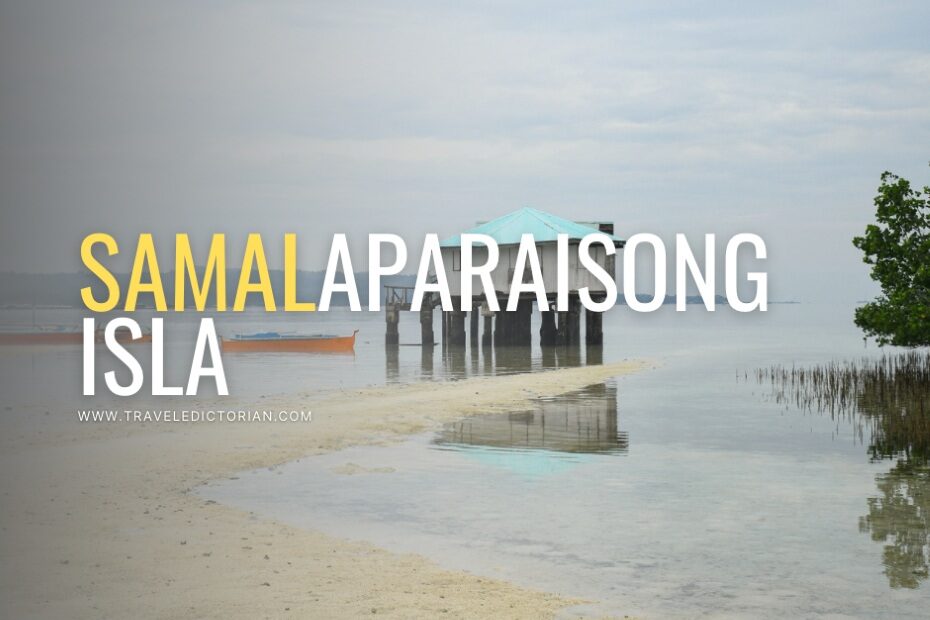
Located off the shores of mainland Samal, Vanishing Island, referred to as “Sanipaan Marine Park,” is a tidal sandbank that partly emerges when it is low tide and submerges when it is flood tide, hence the name. The sandy cream-colored sandbar with patches of mangroves and a sight of stilt houses blends with the skin-deep turquoise waters and has become a favorite spot for aquatic activities.
While the tidal landform is only accessible with a pump boat from Tambo Wharf, island hoppers may charter a round-trip transfer for a fee of PHP 500.00 or USD 8.26 for five participants. Vanishing Island is open from Monday through Sunday from 7:00 a.m until 4:00 p.m.
Blue Bird View Deck
Located next to the Babak-Samal-Kaputian Road, Blue Bird View Deck is an observation platform that serves as a rest stop for those traversing along Samal’s main thoroughfare. The Blue Bird View Deck, which derives its name from a blue-colored bird species that is frequently spotted in the area, provides a sweeping panorama of the densely forested upland, expansive seascapes, and even the nearby city, Davao.
In addition, the overlook offers a broad view of Malipano Private Island, residence of the five-star Pearl Farm Beach Resort. To take pleasure in the comprehensive island views, a minimal fee of PHP 20.00 or USD 0.33 is charged upon entry to the property.
Kaputian Beach
The Kaputian Beach, situated in Poblacion, Kaputian District, is widely recognized for its fine white sands that complement perfectly with the crystal clear blue seas. Due to its accessibility and proximity to arterial roads, Kaputian, which is excellent for swimming, snorkeling, and picnics, often draws larger crowds than its other counterparts.
Much like the other beaches of the island, it offers a few basic amenities, such as open-air huts that are ideal for both day trips and overnight stays. The admission fee for non-resident visitors is PHP 100.00 or USD 1.65 for a daytime visit and PHP 150.00 or USD 2.48.
Sabang Cliff
Are you seeking some adventures? Sabang Cliff is a crowd-pleasing spot on the island of Samal, especially for those who are into extremely exhilarating activity. Apart from swimming and snorkeling, it also highlights adrenaline surge activity, like cliff diving that will test someone’s grit.
These diving platforms range from 14 to 20 feet and even as high as 40 feet. Thus, be aware of the precautionary measures when engaging in this highly adrenaline-fueled pursuit. Entrance is free of charge except for the aquatic gears, which are available for a fee.
Hagimit Falls
Tucked within the verdant foliage, Hagimit Falls, named after a specific species of tree, features terrace-like pools from the chains of cascades about a few meters high. This collection of stepped basins, which measure as deep as 8 feet, is perfect for a quick dip over the tolerably cool waters.
Hagimit Falls, which is also a great location for picnics, opens daily from 8:00 a.m. until 5:00 p.m. The admission fee is PHP 150.00 or USD 2.48, while discount is extended to seniors, children, and PWDs.
04:45 pm – 05:30 pm Confirm reservation and check-in at La Vida Hostel
05:30 pm – 09:00 pm Have dinner, night life, and prepare for sleep
09:00 pm – Sleep
Day 2 - Davao City
Samal Travel Guide Tip: Are you leaving Samal now? Talikud Island and Giant Clam Sanctuary are also worth a visit.
06:00 am – 08:00 am Wake up, prepare for departure, and have breakfast
08:00 am – 08:20 pm Head to Sasa Wharf
From accommodation
Take a tricycle
Alight at Babak Ferry Terminal
08:20 am – 08:35 am Head to Sasa Wharf
From Babak Ferry Terminal
Take the barge
Alight at Sasa Wharf
08:35 am – 09:15 am Head to Davao City (arriving soon)
Budget for Samal Trip
In 2025, I spent PHP 3,865.39 for one day in Samal. However, costs may still vary depending on your travel lifestyle. Please read the article “35 Excellent Tips to Save Money on Travel.”
Below is the Samal Travel Guide budget for your reference.
Pre-Departure
Ninoy Aquino International Airport to Francisco Bangoy International Airport via plane, PHP 1,023.20
1D1N accommodation with breakfast, PHP 1,695.38/2, PHP 847.69
Samal Island Tour, PHP 1,300.00/2, PHP 650.00
1st Day
Francisco Bangoy International Airport to Sasa Wharf via Grab car, PHP 163.00/2, PHP 81.50
Sasa Wharf to Babak Ferry Terminal via barge, PHP 20.00
Entrance fee to Monfort Bat Sanctuary, PHP 120.00
Environmental user fee, PHP 50.00
Tambo Wharf to Vanishing Island via boat, PHP 500.00/2, PHP 250.00
Lunch, PHP 253.00
Admission fee to Blue Bird View Deck, PHP 20.00
Entry fee to Kaputian Beach, PHP 100.00
Entrance fee to Hagimit Falls, PHP 150.00
Dinner, PHP 220.00
2nd Day
Hostel to Babak Ferry Terminal via tricycle, PHP 120.00/2, PHP 60.00
Babak Ferry Terminal to Sasa Wharf via barge, PHP 20.00
Travel Resources
To help you with your travel plans, I’ve gathered a checklist of carefully chosen travel resources. These are the trusted online marketplaces that I highly endorse because of their excellent deals.
Looking for an easy-peasy solution to process your visa application and other travel documents? Consult iVisa!
SafetyWing is your safeguard for travel medical and health insurance while away from home.
The sky is the limit with Skyscanner if you are looking for better and cheaper flight options for your next trip.
Reserve a room on one of the largest online hotel booking platforms, Agoda. It offers unbeatable hotel deals!
Explore the world with HostelWorld! Make a reservation and share a space with newfound buddies.
Drive your way to undiscovered places! Book a car via Discover Cars and experience hassle-free road trips.
Would you like to visit your favorite museum and theme park? For discounted attraction tickets and tours, look for Klook!
For transfers from point A to point B, go for 12Go! It has an extensive coverage of ground transports and ferries, too.
Samal Travel Guide Question: What is the largest fruit bat colony in the world located in Babak, Samal Island?
Please leave your answer and remarks in the comment section. Thank you!
About the Author
J. Sac is the author of “Samal Travel Guide: An Excellent Guide to the World.” He is also the founder of Traveledictorian – a travel blog that publishes well-thought-out travel content.
His passion for writing, photography, and travel fueled him to explore Asia and the rest of the world. He also plans to undertake humanitarian work in his travels. Read his inspiring story and follow him on social media!
P.S. Subscribe to our newsletter for the newest travel guides and the latest updates in the travel industry.