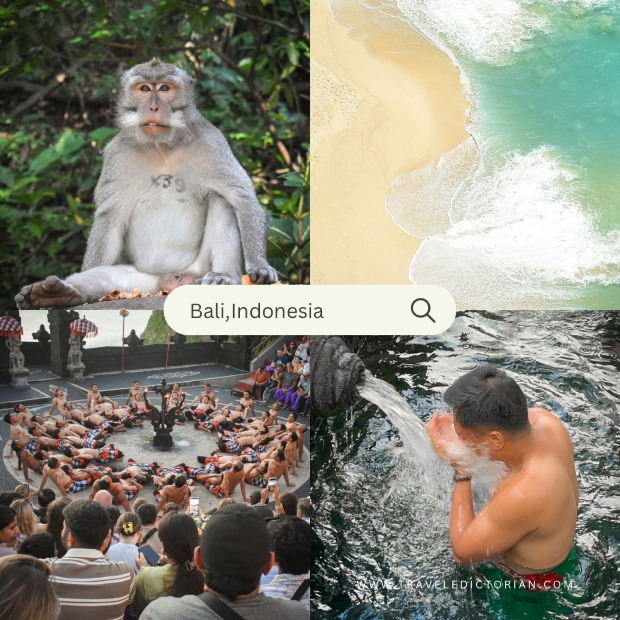
This “Bali Travel Guide” includes a carefully considered itinerary and a detailed travel budget to help you make the most of your four days in Bali.
Disclaimer: This travel guide contains information that is subject to frequent updates. That being said, if you opt to read this article further, you consent to verifying facts with the relevant authorities. Please review the full terms of this website. Please review the full terms of this website.
Introduction
I have been traveling for over a decade now for a short respite from my routine stressors. However, I consistently ended up in a taxing position when holidaying, which often defies my expectations.
I recall how inconvenient it was to spend the nights in the airports of Osaka and Incheon when I arrived late at night to pinch pennies for a day room. Also, I clearly remember the specific moment I was trapped in a “tuk-tuk scam” in Bangkok because I chose to take a local ride than going on an arranged tour.
How could I forget the lengthy strolls I took in Manila under the scorching summer heat that made me soaked in sweat? When I was in Singapore and Hong Kong, I entirely relied on fast foods due to pricey menus.
My trip to Bali made me understand what we spend significantly impacts our convenience. Occasionally it is truly rewarding to indulge in the pleasures we richly deserve. Lounging by the infinity pool while sipping a freshly pureed watermelon is indeed a self-gratifying indulgence.
Disclosure: This post contains affiliate links. When you make purchases through these links, I receive small commissions at no extra cost to you.
Quick Fact About Bali
Indonesia is home to the largest Muslim faithful in the world, which constitute nearly 90% of the country’s population. However, an overwhelming majority of the inhabitants in Bali follows Balinese Hinduism.
Visa in Indonesia
Bearers of foreign passports planning a trip to Indonesia should contact the Directorate General of Immigration in relation to entry requirements. Otherwise, consult iVisa.com, a trusted visa service provider.
Philippine passport holders traveling for tourism in Indonesia are visa-exempt for a maximum of 30 days. In case of visit extension, you are require to apply for a visa.
Having a valid passport and round-trip airline tickets does not guarantee entry into a foreign country. Travelers must go through immigration procedures.
Standard Time in Bali
The Coordinated Universal Time (UTC) in Bali is UTC +08:00.
As such, Bali is four hours ahead of Dubai and six hours ahead of Paris. Moreover, Bali is seven hours ahead of London and twelve hours further ahead of New York. Conversely, Bali is an hour behind Tokyo and three hours behind Sydney. Bali and Manila, on the other hand, share the same exact time.
Climate in Bali
Bali has a tropical climate, which is common to countries close to the equator. Thus, Bali receives comparatively warm temperatures, little humidity, and significant amount of rain year-round, like the rest of Southeast Asia.
Best Time to Visit Bali
Bali exhibits two distinctive seasons: the wet and dry seasons. Whether you explore the island simply for a beachfront retreat during the summer or witness the island in its most lushly green setting during the rainy season, Bali offers a tropical charm that blends well with its two varying seasons.
November to April
In Bali, the wet season lasts from November until April, with January being the rainiest. It is usually characterized by significant levels of temperatures and humidity, along with a high probability of rain, which could lead to consistent flooding and heavy traffic.
However, on the upside, Bali’s rainy season exhibits verdant landscapes, offers off-peak rates, and has much fewer crowds. Besides that, it embraces a calmer environment, especially during the observance of “Nyepi.”
Bali Travel Guide Reminder: “Nyepi,” is a day of silence in Bali, which typically takes place in March of each year. It is a 24-hour period of silence, which runs from 6:00 a.m. to 6:00 a.m. the next day. The religious observance restricts any forms of routines to make way for absolute solitude and meditation.
May to October
The months from May to October mark the dry spell in Bali. It receives relatively warm temperatures and low humidity levels with a minimal risk of rain, which makes it suitable for outdoor recreations, like surfing in Kuta and trekking in Mount Batur.
Bali’s dry season normally draws crowds of tourists, notably during July and August, the busiest months.
Language in Bali
Bahasa Indonesia, or simply Indonesian, is the predominantly spoken language in Bali. Additionally, a significant proportion of the population also use their distinct indigenous language, Balinese.
Bali is heavily reliant on tourism. As such, a vast majority of residents also communicate primarily in English, especially when dealing with international visitors. Here are essential Indonesian words and phrases to learn prior to your trip to Bali:
Good morning – Selamat pagi
I am sorry. – Maafkan saya.
Excuse me. – Permisi.
Do you speak English? – Apaka kamu bisa Bahasa Inggris?
How are you? – Apa kabar?
What is your name? – Siapa nama kamu?
Nice to meet you. – Salam kenal.
Shops or eateries – Warung
Do you like coffee? – Apa kamu suka kopi?
How much is it? – Berapa harga?
Thank you so much. – Terimah Kasih banyak.
You are welcome. – Sama-sama.
Goodbye. – Selamat tinggal.
Currency in Bali
Abbreviated as IDR, Indonesian rupiah, is the official currency in Indonesia. The exchange rate as of July 10, 2026, is IDR 1.00, USD 0.000055, or PHP 0.0034.
Bali Travel Guide Tip: Convert your currency to Indonesian rupiah in downtown Bali, as the exchange rates are better than those at the airport
Modes of Payment in Bali
Bali remains a cash-oriented society where locals and foreign visitors rely primarily on physical currency. Moreover, other payment tools, like bank cards, digital wallets, transit pass, are gaining grounds for a broad range of transactions.
Cash
Hard cash is the most widely used mode of payment in Bali, particularly for small-scale purchases made at “warungs,” entry fees at attractions, fares, and even gratuities. In the event that you run out of cash, ATMs and money changers are dispersed around the city center.
Bank Card
Debit and credit cards, bearing the names “Visa” and “Mastercard,” are arguably the most preferred in Bali. Most high-end hotels, upmarket eateries and cafés, supermarkets, accepts such method of payment, which guarantees uninterrupted transactions both online and in-store.
Digital Wallet
As an alternative to international e-wallets, local equivalents, which include “GoPay” and “OVO,” are two of the widely recognized electronic wallets in Bali. These e-wallets are normally linked to two-sided marketplace platforms, ensuring flexibility for a variety of dining and retail transactions.
Transit Pass
A transit pass, often known as a travel card, is a payment tool that enables its bearer to use public transports and make purchases. The contactless card, which can be either a physical card or a digital pass, thus ensures fast and seamless transactions.
Electronic cards, notably Mandiri E-Money, are the primary accepted mode of payment for commuter service in Bali and the rest of Indonesia. It is a reloadable smartcard that can be purchased in convenience stores, like “Indomaret” and “Alfamart,” for around IDR 25,000, USD 1.38, or PHP 85.15.
Ways of Getting to Bali
Bali is among the 17,508 islands that make up Indonesia, the largest archipelagic state in the world. Vast bodies of water entirely surround the island province, with the Bali Sea to the north and the Indian Ocean down south.
Moreover, the Lombok Strait splits Bali and Lombok to the east. The Bali Strait, on the other hand, separates Bali from Java Island to the west. Thus, the geographical location of Bali makes it reasonably accessible via a plane or a ferry.
By Air
The I Gusti Ngurah Rai International Airport, or simply Denpasar Airport, is Bali’s primary gateway. It handles numerous domestic and overseas flights, especially those from Europe, Australia, and several other Asian destinations, such as Jakarta, Bangkokand Hong Kong.
Bali Travel Guide Reminder: The flight time between Manilaand Bali is about 4 hours.
By Sea
Java to Bali
Those arriving in key cities in Java, such as Jakarta, Yogyakarta, and Surabaya, may take an overland route to Ketapang Harbor, Java’s eastern extremity. The port operates a round-the-clock timetable, following a 20-minute interval, to Bali.
From Ketapang Harbor, take the passenger ferry that goes to Bali’s Gilimanuk Port, via the Bali Strait, which is roughly half an hour. Then, take either a bus or a taxi to Denpasar for another 3 to 4 hours.
Lombok to Bali
Lombok, which lies east of Bali, features more unspoiled beaches and fewer tourists. Taking the short-haul flight from the island’s primary point of entry that handles local and international traffic, mainly from Singapore, to mainland Bali is exceedingly practical.
As an alternative, embark on the commuter ferry, Bali and Lombok route; even though it takes longer. The passage, which relies on the speed of the ferry, could take anywhere from an hour and a half up to five hours on board.
Australia to Bali
Despite their great distance, only luxurious cruise ships and superyachts – rather than the traditional passenger vessels – go sail from Australia to mainland Bali. The Sydney and Bali sea route, for instance, provides a seamless cruising experience even though it may take roughly thirteen days to reach the tropical island.
Getting Around Bali
Geographically speaking, Bali Island is larger than Brunei, and its broad expanses sit an abundance of tourist sites with cultural significance that are sprawled out across the island province. Although they are all worth seeing, its public transportation’s restricted geographic reach makes it difficult to travel around, mainly for those visiting the fringes of downtown Bali.
Thus, visitors to the island primarily rely on tour operators that offer private car rentals and even motorbike charters to gain access to Bali’s less traveled places.
Bali Travel Guide Reminder: During the peak hours in Bali, anticipate a gridlock traffic in the city centers. Thus, refrain the hours between 7:30 a.m. until 9:30 a.m. and 4:30 p.m. to 6:30 p.m.
Bus
In Bali, public buses are obviously a cheap alternative for transit. However, they solely operate on limited coverage, connecting the airport and its urban centers. Furthermore, getting to neighboring islands, like Lombok, is viable with its inter-island routes.
Bali Travel Guide Reminder: How do I get on and get off the bus in Bali? Buses in Bali, specifically “Trans Metro Dewata,” have two doors. Enter through the front door and tap your transit pass over the card reader next to the driver. Then, locate an empty seat. As you get closer to your location, proceed to the middle door to exit.
Regular Bus
Bali’s commuter service, often referred to as “Trans Metro Dewata,” is a modernized bus fleet that spans primary locations in the city. The air-conditioned bus rapid transit, which is noticeable for its bold red color, traverses to specified stops in Denpasar, Badung, and Gianyar.
Taking public transport is reasonably priced. A single journey for the regular passenger is IDR 4,400, USD 0.24, or PHP 14.99. Students, the elderly, and people with impairments, on the other hand, are eligible for a discounted fare. It is important to note that the service does not accept cash; rather, use electronic cards, like Mandiri E-Money, to gain access.
The “Trans Metro Dewata,” which follows a dispatch interval of 15 to 20 minutes, leaves as early as 4:30 a.m. until 7:00 p.m. daily.
Tourist Shuttle
A tourist shuttle, as the name suggests, is a shared commuter service intended primarily for excursionists. The fully air-conditioned, comfortable tourist bus, notably Kura-Kura Bus, follows predetermined routes between the airport and tourist towns of Badung and Gianyar. Additionally, the highland district of Kintamani is covered in its course. The first shuttle departs at around 9 in the morning.
Inter-island Bus
Those heading to Bali’s neighboring islands may embark on the inter-island bus, notably the Perama Bus. It serves inter-island routes between mainland Bali and nearby islands, including Lombok and Java.
Taxi
The blue-colored taxis in Bali are convenient means of transportation as they reach even downtown’s outer limits, even though they are significantly pricier than public buses. Since taxis are usually stationed adjacent to ports, retail centers, and touristy locations, hailing one is rather easy.
The flag rate for a one-way trip is IDR 7,000, USD 0.39, or PHP 23.84 and it progressively rises to IDR 6,600, USD 0.37, or PHP 22.48 for every succeeding kilometer. Additionally, waiting time incurs a surcharge.
As an alternative to standard taxis, notably “Blue Bird,” ride-hailing services, like “Grab” and its local counterpart “Gojek,” provide a seamless book-a-ride scheme.
Bali Travel Guide Reminder: Have with you the following documents to refrain from being penalized for a serious traffic violation in Bali if you are driving a car or a motorbike:
a true copy of driving license from the country of residence, and
a valid International Driving Permit or IDP.
Private Car
A private car is arguably an ideal option for those who wish to explore the vast stretches of Bali. It provides much ease, especially for excursions that span remote locations, like Karangasem. Moreover, it is appropriate for tours with a flexible itinerary, whether you chose for a self-driving car or a chauffeured ride.
Motorbike
A motorbike is a more cost-effective option rather than a private car when exploring the expanses of Bali. The motor-driven vehicle is highly recommended for those seeking an adrenaline thrill while navigating the island’s less-traveled routes and avoiding notorious traffic.
Ferry
Bali comprises the main island and 32 other adjoining islands, including Nusa Penida. To get to these islands from mainland Bali, take a watercraft service that sets sail on a fixed departing schedule.
Areas to Stay in Bali
Bali is a premier tourist destination and an increasingly renowned dreamy honeymoon hideaway. Thus, the tropical island features an overwhelming range of temporary stays, from traditional Balinese-inspired houses to modern luxury villas, which are dotted over the island’s neighborhood gems and idyllic locales.
These are the best neighborhoods in Bali to spend your tropical island getaway.
Denpasar
Bali’s capital, Denpasar, is a thriving hub of commerce, teeming with local markets and dining establishments. Additionally, hotels and holiday homes are spread out over the vast expanses of Bali’s largest city.
Hotel Jati Sanur and Hyatt Regency Bali are close to the shores of Sanur and Sanur Ferry Port, the primary jump-off point to the Nusa islands.
Badung
The I Gusti Ngurah Rai International Airport, the main entry point to Bali, lies in Badung. Besides a transport-accessible location, the vibrant neighborhood is a favorite haunt for those who prefers beachfront escapades.
Down the far-reaching shorelines of Badung are beach clubs perfect for sundown vistas and all-night raves. Many coastal properties are also arrayed in the neighborhood, such as White Goose Boutique Hotel in Canggu and ANSHEL Hotel in Seminyak.
For those into shoreline respite, Legian has a broad range of beachfront hotels, including Kampi Hotel. Kuta, on the other hand, has an assortment of seaside short-term stays, like Kuta Paradiso Hotel.
Additionally, a handful of luxurious stays sit in Badung, which include AYANA Resort in Jimbaran and the Shanti Residences in Nusa Dua, both offer premium guest experiences.
Gianyar
Gianyar, specifically Ubud, is the epicenter of arts, culture, and tourism in Bali. The idyllic locale boasts a wealth of places of interest, which span both cultural sights and natural scenery. Short-term stays, mainly Balinese traditional houses, like Ubud Inn Cottage, stood close to crowd-pleasing attractions. Additionally, many standalone private villas, such as Airsania Ubud Antique Villas, hide in the serene and lush setting of Gianyar.
Klungkung
Bali’s smallest regency, Klungkung, lies east of the island province. It consists of fourteen outlying islands in addition to a certain span of mainland Bali.
Despite its modest size, Klungkung – more specifically Nusa Penida – draws crowds of tourists due to its scenic natural panorama and a range of outdoor pursuits. As such, a broad spectrum of lodging properties, such as Pramana Natura, enables guests to take pleasure in the tropical oasis away from the bustling pace of Bali’s urban center.
Internet in Bali
Bali has activated free Wi-Fi access spots in public spaces, particularly in I Gusti Ngurah Rai International Airport, by logging into the “Free Bali Airport WiFi” network. In addition, commercial premises, such as lodging and dining establishments, offer complimentary Wi-Fi to their guests.
For a hassle-free travel experience in Bali, consider getting a prepaid SIM card instead.
Power Adaptor in Bali
Bali operates on a 230 V supply voltage with a frequency of 50 Hz and uses two types of power plugs:
C or has two round pins
F or has two round pins with two earth clips on both sides
Bali Travel Guide Itinerary
Highlights: Sacred Monkey Forest Sanctuary, Nusa Penida, Kecak Fire Dance, and Tirta Empul
Bali Travel Guide Reminder: You must register your entry information through the All Indonesia Arrival Card up to 72 hours before your scheduled arrival.
Additionally, all foreign visitors entering Bali are required to pay the “Bali Tourist Levy” of IDR 150,000, USD 8.31, or PHP 510.91 through their official website, Love Bali, or the Love Bali app. Rather, pay it onsite upon arrival.
07:50 am – 09:00 am Arrival at the I Gusti Ngurah Rai International Airport and clear immigration and custom checkpoint
09:00 am – 07:00 pm Explore Tabanan and have breakfast and lunch
Are you going to Tabanan on your first day in Bali without worrying yourself about the ride to take? Reserve a 10-hour car rentalto explore the “Rice Granary of Bali” with much convenience!
Bali Travel Guide Reminder: A minimal parking fee, ranging from IDR 2,000 to IDR 10,000, USD 0.11 to USD 0.0.56, or PHP 6.81 to PHP 34.07, is charged on visitors arriving in vehicles at certain tourist sites in Bali.
Jatiluwih Rice Terraces
The Jatiluwih Rice Terraces, designated as a “UNESCO World Cultural Heritage Site,” is an imposing engineering marvel of terraced paddy fields, utilizing a gravity-fed irrigation method. It is regarded as Bali’s largest rice terraces, which stretches over 600 hectares in the highlands of central Bali.
From a distance, the idyllic farmland offers panoramic views, particularly from February to April, when rice paddies are in their most lush. The “impressively beautiful” terrain, as the name denotes, has trekking routes that allow visitors to get a comprehensive look of the locally renowned man-made feat.
Jatiluwih Rice Terraces is open daily from 6:00 a.m. until 7:00 p.m. The admission fee, on the other hand, costs IDR 75,000, USD 4.15, and PHP 255.45 for foreign visitors, while IDR 50,000, USD 2.77, or PHP 170.30 for local tourists.
Bali Travel Guide Reminder: Whether you are a devotee or simply a temple visitor, treat religious beliefs and holy places with reverence. When visiting a place of worship, be mindful of the temple etiquettes.
Ulun Danu Beratan Temple
Built in 1633, Ulun Danu Beratan Temple is a Hindu worship place devoted to Dewa Dunu, the Balinese goddess of lakes and rivers. It is further separated into three open courtyards intended primarily for temporal pursuits and religious ceremonies.
However, the most remarkable segment of this temple complex is the stepped-roofed wooden structures. The Hindu shrine, often referred to as the “Meru Towers,” appears to float over Beratan Lake, offering visitors and pilgrims a lakeshore respite.
While the temple complex is accessible 24 hours for spiritual functions, the Ulun Danu Beratan Temple is typically open to tourists from 7:00 a.m. to 7:00 p.m. Admittance fee of IDR 75,000, USD 4.15, or PHP 255.45 for visiting adults are collected at the entrance gate. Additionally, children are entitled for a reduced fee of IDR 50,000, USD 2.77, or PHP 170.30.
A Must-Eat in Bali: Nasi Campur, or “mixed rice,” is Bali’s signature dish. A plate of the traditional Balinese rice dish consists of a cup of steamed rice and is served with small portions of sides, like shredded chicken or pork. In addition, vegetable salad seasoned with grated coconut, cucumber slices, fried or hard-boiled eggs, shrimp crackers, and chili sauce add to the dish’s delightful flavors.
Tanah Lot Temple
The Tanah Lot Temple, erected in the 16th century, is an ancient Hindu temple devoted to the goddess of the sea and rain, Dewa Varuna. It is interestingly perched above a shallow, submerged rock on the southwest coasts of mainland Bali, making it one of the island’s most recognizable tourist sights.
Even while Tanah Lot Temple is accessible to the public from 7:00 a.m. until 7:00 p.m., it is highly suggested to visit around nightfall to witness the dramatic sundown, setting on the western horizon. The entrance fee to the temple costs IDR 75,000, USD 4.15, or PHP 255.45 for adult foreigners. Foreign children and locals are eligible for a subsidized entry.
Bali Travel Guide Tip: As an alternative, stay in a hostel. A hostel is a lodging facility that provides basic amenities, like bunk beds and communal bathrooms. Thus, if you are on a tight budget, book a hostel in Bali.
06:00 pm – 8:00 pm Quick rest and have dinner
08:00 pm – 09:00 pm Prepare for sleep
09:00 pm Sleep
Day 2- klungkung
04:30 am – 06:30 am Wake up, prepare for the tour, have breakfast, and head to the meeting place
06:30 am – 07:30 pm Explore Nusa Penida and have lunch
Don’t miss Nusa Penida on your Bali trip!! Participate in a pre-arranged tour that will take you to the island’s dramatic splendor. Hurry and book Nusa Penida Day Tour now!
Nusa Penida
Nusa Penida is an expansive offshore island southeast of Bali. The exotic escape features geological formations that consistently pull in hordes of tourists.
Kelingking Beach, which lies on the western half of the island, has captured widespread attention owing to a Tyrannosaurus Rex-like headland that adds a defining feature to the shoreline’s azure tropical waters. Moreover, on the eastern strands lie diamond-shaped karst towers, seemingly floating across the rippling turquoise seas.
Besides being a tourist haunt for numerous geological features, it is also an adventure-focused destination for seaside recreations and underwater pursuits.
07:30 pm – 09:00 pm Have dinner
09:00 pm – 10:00 pm Prepare for sleep
10:00 pm Sleep
Day 3 - Karangasem, Bangli, Gianyar
05:00 am – 07:00 am Wake up, prepare for the tour, have breakfast, and head to the meeting place
07:00 am – 07:00 pm Explore Karangasem, Bangli, and Gianyar and have lunch
Car for hire! Reserve a 12-hour car rental to see some of the most sacred religious sites in eastern and central Bali.
Lempuyang Temple
Located in the upland region of eastern Bali, Lempuyang Temple is among the oldest and most revered worship places on the island. The Hindu temple, which is dedicated to Ida Betara Hyang Iswara, the ultimate defender of the east, is has complex of interconnected temples, including Pura Penetaran.
Pura Penetaran is the precise site of “Gates of Heaven,” an iconic Balinese landmark set against Bali’s highest peak, Mt. Agung. It is one of the most photographed sights, which pulls in crowds of tourists.
Although the Lampuyang Temple is open for worshippers round-the-clock, visitors are only permitted to enter the temple grounds from 7:00 a.m. until 5:00 p.m. The admission fee, which includes the sarong rental, costs IDR 70,000, USD 3.88, or PHP 238.42. In addition, a round-trip shuttle service costs an extra IDR 50,000, USD 2.77, or PHP 170.30.
Tirta Gangga
Erected in the 1940s, Tirta Ganga, which is translated to “Water from the Ganges,” is a former royal palace located in Karangasem on the eastern portion of Bali. It served as a royal residence and was then transformed into an increasingly favorite stop for visitors.
The water palace complex features well-manicured gardens, a collection of various rock sculptures, a museum, and a sanctified pool. A koi pond with built-in floating steps, however, is the primary highlight of the royal grounds, which certainly appeals to crowds of tourists.
Tirta Gangga is accessible to visitors from 6:00 a.m. until 7:00 p.m. Before entering the royal water palace, an admission fee of IDR 90,000, USD 4.98, or PHP 306.55 is collected to adult visitors. Children and seniors, on the other hand, are eligible for a discounted fee.
Penglipuran Village
Penglipuran Village is a settlement of over a hundred hectares located on the highlands of central Bali. The sleepy residential village has been recognized as the cleanest in the island province, with well-kept traditional Balinese homes arrayed harmoniously down spotless walkways.
Those who plan to visit Penglipuran Village, mainly for scenic walks, are required to pay IDR 50,000, USD 2.77, or PHP 170.30. On the other hand, children receive a reduced entry ticket of IDR 30.00, USD 1.66, or PHP 102.18. The Balinese village is open from 8:00 a.m. until 6:30 p.m.
Tirta Empul
The Tirta Empul, which literally means “holy spring,” is an ancient water temple devoted to the Hindu god of preservation, Vishnu. It features dipping pools with a succession of carved stone spouts that pour out sanctified spring water for ritualistic purification.
The entrance fee of IDR 75,000, USD 4.15, or PHP 255.45 includes access to the temple grounds and use of sarong. Children are admitted at a discounted rate of IDR 50,000, USD 2.77, or PHP 170.30.
To partake in the traditional cleansing rites, a separate fee is to be shelled out, ranging from IDR 200,000 to IDR 400,000, USD 11.07 to USD 22.15, or PHP 681.21 to PHP 1,362.43, for the temple guide. Tirta Empul is open at 7:00 a.m. up to 6:00 p.m.
07:00 pm – 09:30 pm Have dinner and try Balinese massage
09:30 pm – 10:30 pm Prepare for sleep
10:30 pm Sleep
Day 4 - Gianyar and Badung
07:00 am – 09:00 am Wake up, prepare for the tour, and have breakfast
09:00 am – 10:00 am Explore Ubud Monkey Forest Sanctuary
Bali Travel Guide Reminder: Primates, like the long-tailed macaque monkeys, are fiercely hostile creatures, especially if they sense potential threats. Thus, exercise cautions whenever possible, like staying out of range, avoiding making eye contact, refraining from offering food, and securing personal valuables.
Sacred Monkey Forest Sanctuary
The Sacred Monkey Forest Sanctuary, often known as the Ubud Monkey Forest, functions as a nature reserve for thousands of free-roaming long-tailed macaque monkeys and other rare plant species throughout the 12-hectare woodland.
Besides being a wildlife refuge, the monkey forest serves as a sacred space for spiritual practices, a venue for scholarly studies, and a highly regarded ecotourism site.
The Ubud Monkey Forest is open daily from 9:00 a.m. until 6:00 p.m. with last admission at 5:00 p.m. Entrance tickets are sold at IDR 130,000, USD 7.20, or PHP 442.79 to foreign adults, while children and locals are eligible for discounted rates.
“High in the canopy, branches will sway, A little brown monkey is starting his day!”Grab Ubud Monkey Forest admission tickets and see firsthand these exceedingly engaging primates!
10:00 am – 10:15 am Head back to hotel, prepare for departure, and early check-out
10:15 am – 10:15 pm Explore Gianyar and Badung and have lunch
You still have a day to explore Bali! As you bid farewell, make your way to the must-see sights in Gianyar and Badung. Reserve a 12-hour car rental now!
Tegallalang Rice Terraces
Terraced rice fields abound in Bali, notably the Tegallalang Rice Terraces, which is just a short drive from north of Ubud. Tegallalang Rice Terraces, in contrast to Jatiluwih Rice Terraces, appear to be much steeper and denser, following the natural contours of the hillsides.
Due to its widespread interest and ease of access from the urban center, neighborhood cafés, local shops, and leisure facilities are arrayed right next to the lush and dramatic landscape.
Tegallalang Rice Terraces has no common ticketing counters. Visitors may therefore have to pay around IDR 60,000, USD 3.37, or PHP 204.44, depending on the access point. The sightseeing spot, on the other hand, typically opens from 7:00 a.m. to 6:00 p.m. daily.
Nail the perfect capture in Gianyar! Book Bali swing tickets and strike a pose against the scenic rural backdrops.
Seminyak Beach
Along the far-reaching coastlines of western Bali are wide, sandy beaches, including Seminyak Beach, a crowd-pleasing spot for swimming, surfing, or simply sunbathing. Retail and dining establishments run parallel along the shores of Seminyak, which makes it also a favorite local hangout for shopping, dining, and after-hours parties.
Its standout feature, however, is the stylish beachfront arrangements of multicolored parasols and bean bags, perfect for seaside lazing.
Uluwatu Temple
The Uluwatu Temple, which lies southwest of mainland Bali, is a sea temple dedicated to Sang Hyang Widhi Wasa, the highest deity in Balinese Hinduism. The place of worship sits atop the cliff overlooking Uluwatu Beach, which adds to its distinguishing feature.
On the brink where the sacred Hindu temple is silently seated is the sweeping view of the Indian Ocean, made even more staggering by the sunset below the western horizon. In addition, Uluwatu Temple hosts a nighttime Hindu Balinese fire dance that consistently pulls in crowds of spectators.
The Uluwatu Temple is open to worshippers 24/7, but visitors are only allowed admission from 7:00 a.m. up to 7:00 p.m., primarily for touristic purposes. Foreign nationals, mainly adult visitors, are required to pay entry fees IDR 60,000, USD 3.37, or PHP 204.44. While foreign children and residents are entitled to a discounted rate.
“Cak-cak-cak-kechak, Cak-cak-cak-kecha!” Catch the “Kecak Fire Dance,” a chant-based traditional Balinese Hindu performance, that will surely leave you in awe! Purchase your Kecak Fire Dance tickets for your front-row seat!
08:00 pm – 12:55 am Arrival at the I Gusti Ngurah Rai International Airport, check-in, clear immigration and custom checkpoint, have dinner, and prepare for boarding
In 2026, I spent PHP 28,002.01 on a four-day trip in Bali. Travel expenses, however, may still vary with your spending habits. Read “35 Excellent Tips to Save Money on Travel.”
Here are the itemized travel expenses in Bali for tyour reference.
To help you with your travel preparations, I have compiled a list of booking tools that I highly recommend for their excellent deals.
Looking for an easy-peasy solution to process your visa application and other travel documents? Consult iVisa!
SafetyWing is your safeguard for travel medical and health insurance while away from home.
The sky is the limit with Skyscanner if you are looking for better and cheaper flight options for your next trip.
Reserve a room on one of the largest online hotel booking platforms, Agoda. It offers unbeatable hotel deals!
Explore the world with HostelWorld! Make a reservation and share a space with newfound buddies.
Drive your way to undiscovered places! Book a car via Discover Cars and experience hassle-free road trips.
Would you like to visit your favorite museum and theme park? For discounted attraction tickets and tours, look for Klook!
For transfers from point A to point B, go for 12Go! It has an extensive coverage of ground transports and ferries, too.
Bali Travel Guide Question: Which village is the cleanest in Bali? Please leave your answer and remarks in the comment section.
About the Author
J. Sac is the author of “Bali Travel Guide: An Excellent Guide to the World.” He is also the founder of Traveledictorian – a travel blog that publishes well-crafted travel content.
His passion for writing, photography, and travel fueled him to explore Asia and the rest of the world. He also plans to undertake humanitarian work in his travels. Read his inspiring story and follow him on social media!
P.S. Subscribe to our newsletter for the newest travel guides and the latest updates in the travel industry.